






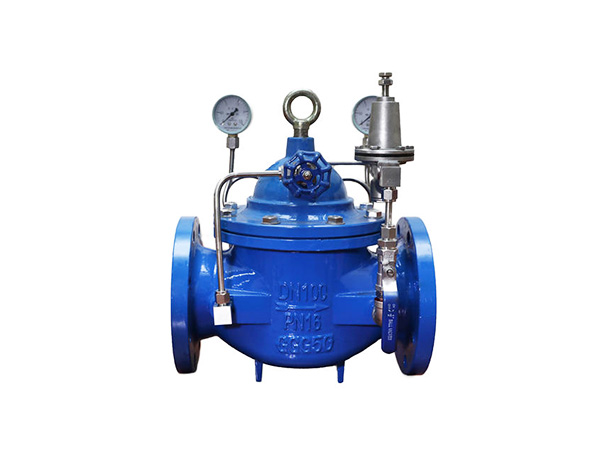
Emergency Shut-off Valve
Emergency Shut-off Valve is a critical safety isolation device designed for rapid pipeline cut-off under abnormal conditions, widely deployed in water supply, fire protection, oil & gas, chemical processing and industrial fluid delivery systems. Differing from ordinary manual regulating valves, this product integrates quick-trigger emergency closing structure, which can instantly block medium transmission to prevent equipment damage, liquid leakage, overflow accidents and fire spread once dangerous signals are detected. Available in multiple body styles including angle, straight-through, flanged, grooved and threaded types, it supports manual emergency pull trigger, hydraulic linkage, pneumatic drive and solenoid electric control, meeting diversified safety protection demands of different pipeline stations, pump houses, tank farms and factory workshops.
The valve body is manufactured from high-strength ductile iron or cast steel with full fusion bonded epoxy coating on inner and outer walls. The coating delivers superior anti-corrosion, rust-proof and non-toxic performance, suitable for drinking water, fire water, industrial circulating water and neutral chemical medium transportation. The sealing assembly adopts wear-resistant EPDM or fluorine rubber lining, achieving bubble-tight bidirectional shutoff after emergency closure; reinforced diaphragm or piston driving components guarantee stable response even under long-term continuous working pressure. All internal moving parts are processed with anti-rust treatment, avoiding jamming failure caused by sediment, moisture and corrosive medium, which ensures reliable instant action when emergencies occur.
Its core design highlights ultra-fast cut-off performance and multi-trigger safety linkage. In manual emergency version, a pull cable handle is reserved outside the valve chamber. Operators can pull the wire rope from a safe distance to instantly cut off fluid without approaching high-risk pipeline sections. For automatic control types, the valve can receive interlock signals from liquid level sensors, pressure transmitters, smoke detectors and pump fault alarm systems. Once overpressure, overflow, fire or pump stall accidents happen, the actuator drives the valve disc to fully close within seconds, effectively isolating the fault section from the whole pipe network and stopping the spread of hazards. An optional visual position indicator clearly shows open/closed state for quick daily inspection, and reset structure allows simple recovery after danger elimination without complicated disassembly.
Compared with conventional gate and globe valves, emergency shut-off valves possess exclusive safety advantages. Ordinary valves require repeated handwheel rotation to complete closing, which wastes precious time during accidents; while this safety valve realizes one-step rapid shutoff to minimize loss. The integrated anti-reset locking device prevents accidental opening before hidden dangers are completely removed. Its compact overall structure saves installation space in narrow valve wells and equipment rooms, and detachable wearing parts support on-site replacement without pipeline cutting, lowering maintenance downtime and operating costs. Multiple connection ends (flange, groove, thread) are compatible with mainstream pipeline matching fittings for flexible construction layout.
Standard specifications range from DN25 to DN1200 with pressure grades PN10, PN16 and PN25, applicable medium temperature from 0°C to 80°C for water system models, and wider temperature range for cast steel chemical variants. Complying with ISO safety standards and pipeline engineering specifications, Emergency Shut-off Valve is an indispensable safety component for municipal water plants, high-rise building fire systems, industrial cooling circulation pipelines, chemical storage tank outlets and gas transmission stations. With sensitive response, reliable sealing and diverse control modes, it provides all-round emergency isolation protection, greatly improving the overall safety coefficient of fluid conveying systems and reducing risks of property loss and personal injury caused by pipeline abnormal incidents.
 BLOGS
CONTACT US
BLOGS
CONTACT US